How and Why We Chose Sanity as the CMS for HTBlue.com
HT Blue chose Sanity to power HTBlue.com. Here’s how it aligns with our authors, our AI-first workflows, our developers, and our long-term platform strategy.
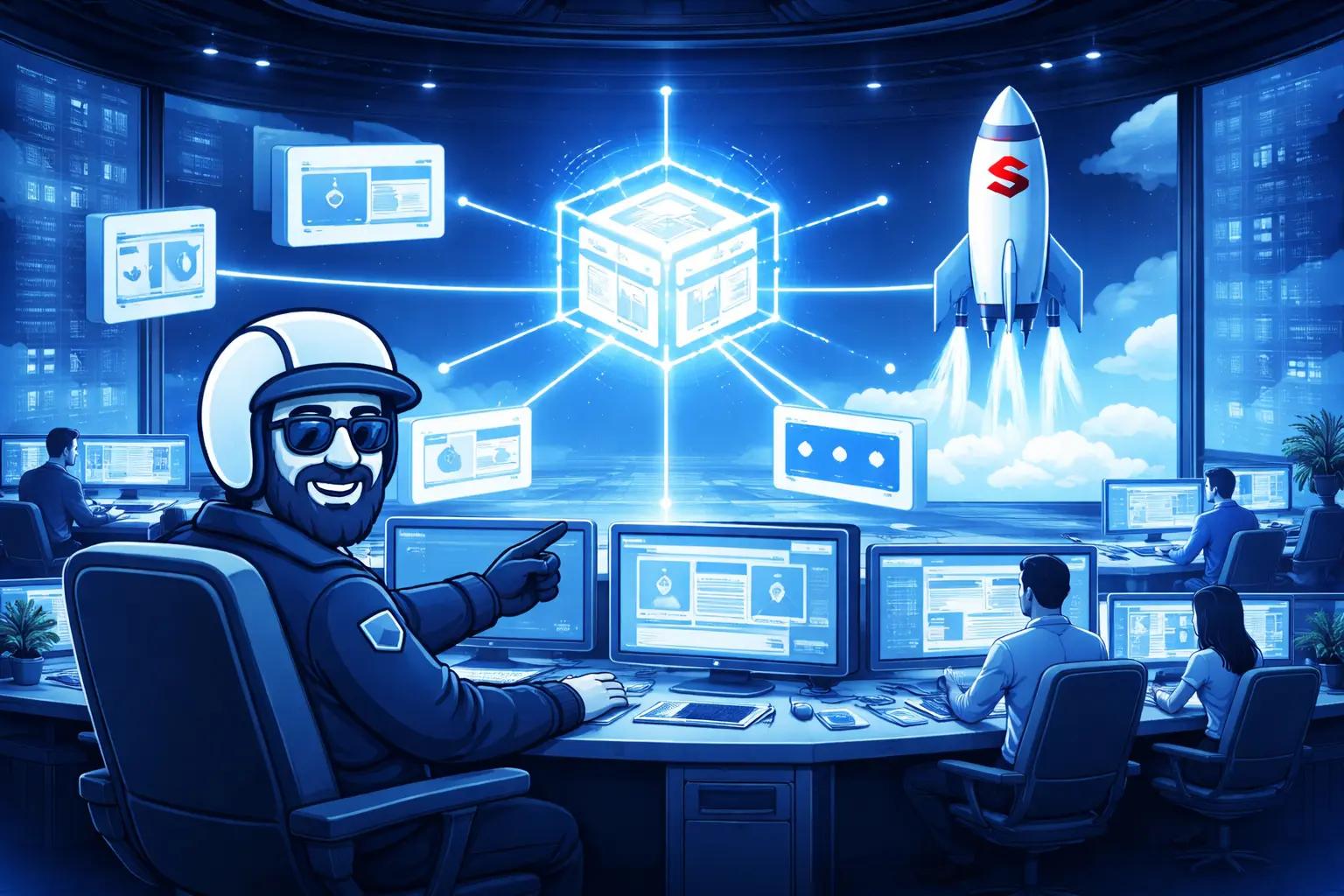
With more CMS platforms than I can count to choose from, including Sitecore, AEM, Optimizely, Drupal, WordPress, Contentful, Strapi, when building the new HTBlue.com we had a big decision on our hands. Each has its merits, and each leaves something on the table. So when it came time to choose the platform that would power our own agency's website, HT Blue had to practice what we preach: evaluate carefully, think long-term, and build on a foundation that won't buckle under the weight of our ambitions.
We chose Sanity. And not because it was trendy or because a vendor bought us lunch. We chose it because after rigorous evaluation, it was the platform that best aligned with how our team actually works, how we want to grow, and what we believe the future of content management looks like.
Here's why.
A Lightweight, Customizable Interface Built for Our Authors
Most CMS platforms treat the editorial experience as an afterthought. They'll give you fifty configuration options for caching but force your content team into a rigid, one-size-fits-all editing interface. We've watched this pattern repeat across dozens of client implementations, and we didn't want it for ourselves.
Sanity Studio is different. It's an open-source, React-based editing environment that we can shape to fit our authors' actual workflows. Our content contributors aren't generic "editors." They're platform architects, AI specialists, marketing strategists, and engineering leads, each with distinct needs and working styles. Sanity lets us build custom input components, reorganize navigation, surface relevant metadata alongside editing fields, and create an authoring experience that feels intuitive rather than imposed.
The real-time collaboration features sealed the deal. Multiple team members can work in the same document simultaneously, with changes appearing instantly. Think Google Docs, but for structured content. For a distributed team publishing thought leadership on a regular cadence, that kind of frictionless collaboration isn't a luxury. It's a necessity.
An Incredibly Generous Free Tier
Let's talk economics. One of the things that initially caught our attention about Sanity was its free tier, which is genuinely one of the most generous in the headless CMS market. The free plan includes unlimited content types, unlimited admin users, two public datasets, real-time collaboration, live previews, visual editing tools, and the full power of Sanity's GROQ and GraphQL APIs.
For many organizations, even those managing hundreds or thousands of pieces of content, the free plan provides everything they need to run a production website. No credit card required. No artificial feature gates designed to force premature upgrades.
When your needs grow, the Growth plan starts at $15 per user per month, which is roughly 67% lower than comparable headless CMS solutions according to recent market comparisons. And even on the free tier, Sanity doesn't cripple the developer or editorial experience. You get the same Content Lake, the same Studio customization framework, and the same API access that powers sites for organizations like Nike, Figma, and PUMA.
For an agency like HT Blue, this pricing model means we can recommend Sanity to clients across the spectrum, from lean startups testing a concept to enterprise organizations scaling globally, without worrying about cost becoming a barrier to adoption.
Native Extensibility with AI Tools
This is where things get exciting, and it's a capability that has transformed how we operate. Sanity's architecture is built from the ground up to integrate with AI tools, and the recent introduction of the Sanity MCP (Model Context Protocol) server takes this to another level entirely.
Through MCP, AI assistants like Claude, Codex, and Gemini can interact directly with our Sanity content. We're not talking about bolted-on AI features that generate a paragraph of filler text. We're talking about structured, schema-aware automation where an AI agent understands our content model, respects our validation rules, and can create, update, and query content through natural language instructions.
At HT Blue, we use this capability daily. We author blog posts, generate structured metadata, and manage content operations through AI-powered workflows that keep a human at the helm. The AI handles the heavy lifting of content structuring, Portable Text conversion, and metadata assignment. A human reviews, refines, and approves. It's the kind of human-centered automation we advocate for with our clients, and we're living proof that it works.
Sanity's Canvas, their AI-assisted writing environment, adds another dimension. It provides non-intrusive AI support during the content creation process, helping authors prepare and refine content without taking over the creative process. For organizations exploring AI-augmented content operations, Sanity provides the most mature and extensible foundation in the headless CMS market today.
A Platform Developers Actually Enjoy
I've spent enough years watching developers grudgingly wrestle with CMS platforms to know that developer experience matters more than most organizations realize. When your engineering team dreads working with the CMS, everything slows down: feature development, bug fixes, content model iterations, integrations. It all suffers.
Sanity flips that dynamic. The schema-as-code approach means developers define content structures in JavaScript or TypeScript, which means content models live in version control, evolve alongside the codebase, and go through the same code review process as any other part of the application. For teams accustomed to modern development workflows, this feels natural rather than forced.
GROQ, Sanity's query language, is a revelation for anyone who has struggled with the limitations of REST endpoints or GraphQL's verbosity for simple queries. It lets developers filter, reshape, and deliver exactly the data they need with a syntax that's both powerful and readable. Combined with the Content Lake's cloud-hosted, real-time datastore, the developer experience is fast, flexible, and genuinely enjoyable.
The headless architecture means frontend teams have complete freedom to use whatever framework makes sense for the project. Next.js, Nuxt, Astro, Remix, or something custom built entirely. The CMS never dictates the presentation layer. For an agency that works across multiple frontend frameworks and client requirements, that flexibility is essential.
Speed That Speaks for Itself
Performance was a non-negotiable criterion in our evaluation. We've built enough enterprise content platforms to know that speed degrades gradually, then suddenly. A CMS that feels snappy during a demo with fifty documents can grind to a halt when you're managing thousands of pages with complex relationships and real-time previews.
Sanity's Content Lake is engineered for speed at scale. Content updates propagate in milliseconds. API responses through the CDN layer deliver cached content with sub-second response times. The platform's elastic scaling adapts automatically to traffic spikes, which means performance stays consistent whether you're serving a handful of internal stakeholders or handling a viral content moment.
For HTBlue.com specifically, the performance difference was immediately noticeable compared to platforms we've used previously. Page builds are faster. Preview rendering is nearly instantaneous. And the Studio itself remains responsive even as our content library continues to grow. When you publish content at the pace we do, that kind of speed isn't just nice to have. It directly affects productivity and team morale.
What the Community and Industry Say
Our experience aligns with broader industry sentiment. Sanity has been rated the top headless CMS on G2 from 2022 through 2025, based on verified reviews from hundreds of organizations. The platform holds over 17% market share in the headless CMS space, and its community of roughly 200,000 developers continues to expand.
The Spring 2025 release marked a significant evolution, positioning Sanity as a "Content Operating System" rather than simply a headless CMS. New capabilities including the centralized Dashboard, the Media Library for cross-team asset management, and the App SDK for building custom applications within the Sanity ecosystem demonstrate a platform that's investing in the future of content operations, not just maintaining the status quo.
Organizations like PUMA, Morning Brew, and National Geographic rely on Sanity for mission-critical content delivery. That kind of adoption at scale validates what we've experienced firsthand: this platform is built to handle serious content workloads without compromising on flexibility or performance.
Other Reasons We Keep Coming Back
Beyond our primary selection criteria, several additional characteristics reinforce our confidence in the platform.
Structured content that travels. Because Sanity stores everything as JSON-based structured data, content isn't trapped in a single presentation. Write it once, deliver it to your website, mobile app, email campaigns, digital signage, or any other channel. For clients pursuing omnichannel content strategies, this is foundational.
Real-time collaboration without conflicts. We mentioned this earlier, but it bears repeating. In an era of distributed teams, the ability to co-edit documents with live presence indicators and instant synchronization isn't a feature checkbox. It's a workflow transformation.
Version history and content releases. Every change is tracked. Every publish event is recorded. Rollbacks are straightforward. And with content releases on the Growth plan, you can stage batches of changes across multiple documents and publish them together, which is invaluable for coordinated campaigns and product launches.
An open ecosystem. Sanity integrates cleanly with the tools modern teams already use: Vercel, Netlify, Shopify, BigCommerce, HubSpot, and dozens more. The growing marketplace of plugins and community contributions means you're building on a living ecosystem, not an isolated platform.
No vendor lock-in. Despite being a SaaS platform, Sanity lets you export your content at any time. Your data remains yours. That kind of portability matters when you're advising enterprise clients on long-term platform investments.
Could Sanity Be Right for You?
Every organization's content needs are different, and no platform is universally perfect. That's exactly why we built our Platform Evaluation services at HT Blue. We help organizations cut through vendor marketing and make CMS decisions based on their actual requirements, team capabilities, integration landscape, and growth trajectory.
If you're currently wrestling with a CMS that feels like it's working against you, or if you're approaching a platform migration and want to make sure you get the foundation right, we can help. Our team has implemented every major CMS platform on the market, and we bring that comparative expertise to every evaluation engagement.
Whether Sanity turns out to be the right fit for your organization or not, the evaluation process itself is where the real value lives. Understanding your content architecture requirements, mapping your editorial workflows, assessing your technical constraints, and building a decision framework that serves you for years rather than months.
Reach out to our team to start a conversation about your CMS needs. We'll bring the same rigor to your evaluation that we applied to our own.
- Sanity
- Headless CMS
- Content Strategy
- Developer Experience
- AI Workflows
- Platform Evaluation
- HT Blue