Sanity CMS in 2026: The Complete Guide for Enterprise Teams
What enterprise teams need to know about Sanity CMS in 2026: Content Lake architecture, Spring Release features, MCP server, pricing, and honest tradeoffs.
Every enterprise CMS evaluation comes down to one question: will this platform grow with us, or will we outgrow it in two years? After leading platform migrations for organizations processing millions of content operations monthly, I can tell you that Sanity has quietly become one of the most compelling answers. Not because it does everything out of the box, but because of what your engineering team can build on top of it.
What Sanity Actually Is (And What It Isn't)
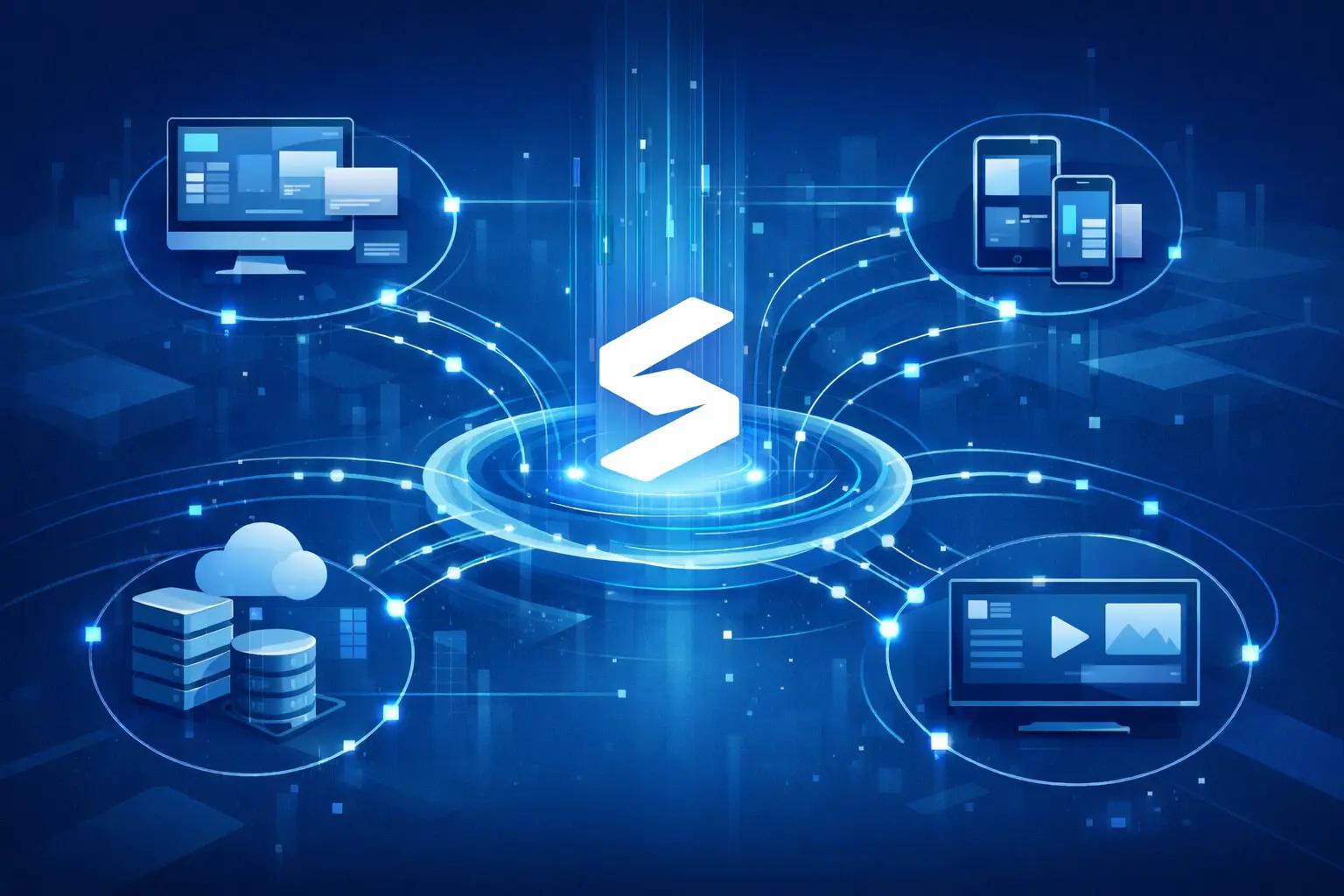
Sanity describes itself as a "Content Operating System," and that label matters more than it sounds. Unlike traditional headless CMS platforms that store content and serve it through APIs, Sanity treats content as structured data in a cloud-hosted datastore called the Content Lake. Every piece of content is JSON, every relationship is queryable, and every mutation is tracked in real time.
The editing environment, Sanity Studio, is an open-source React application that you define entirely in code. There are no drag-and-drop template builders or pre-built themes. Your content model lives in version-controlled TypeScript alongside your application, which means schema changes go through pull requests just like any other code change.
For engineering teams accustomed to infrastructure-as-code, this feels natural. For teams expecting a turnkey solution, this requires a mindset shift. Sanity gives you a powerful engine and a toolkit. You build the car.
The Content Lake: Why Architecture Matters
The Content Lake is Sanity's cloud-native datastore, and it is the foundation that separates the platform from competitors like Contentful or Storyblok. Content is stored as structured JSON documents with referential integrity, meaning you can create relationships between any content types and query across them without pre-defining rigid joins.
Sanity's proprietary query language, GROQ (Graph-Relational Object Queries), is designed specifically for this architecture. Instead of querying against a predefined schema endpoint like GraphQL, GROQ queries run directly against the Content Lake. You filter, project, and reshape data in a single request with no round-trips. For your frontend developers, that means requesting exactly the data they need without over-fetching, while Sanity reports API response times around 32 milliseconds supporting 500 concurrent queries.
The real-time capability deserves its own mention. Changes in Sanity Studio propagate to the Content Lake instantly. The Live CDN updates content globally within 60 seconds. When combined with Next.js Incremental Static Regeneration on Vercel, cache updates propagate in roughly 300 milliseconds through the edge network. That is production-grade performance for dynamic content at scale.
The 2025 Spring Release: What Enterprise Teams Should Know
Sanity's Spring 2025 release was a significant leap, backed by an $85 million Series C that reinforced the platform's trajectory from headless CMS to content operating system.
The App SDK lets your team build full React applications (custom dashboards, workflow tools, data visualizations) that operate as native Sanity experiences with caching, authentication, and optimistic UI handled automatically. Functions introduce serverless compute that runs in response to content events directly within Sanity's infrastructure, eliminating the need for separate webhook servers when you need to sync data, send notifications, or validate content on publish. The revamped Media Library introduces "Aspects," custom metadata schemas for assets that transform digital asset management into a structured, queryable content type. The Enterprise tier includes unlimited Aspects, role-based access control, and version history.
Studio v4 (Node 20+) reinforces the code-first approach with full GROQ support in Functions and a predictable v3 upgrade path. Visual editing through the Presentation layer and Content Source Maps gives editors the ability to click elements in a live preview and edit directly. This isn't page-building, which Sanity intentionally avoids, but it bridges the gap between structured authoring and the visual feedback editorial teams need.
MCP Server: Where AI Meets Content Operations
Sanity's official Model Context Protocol (MCP) server, now hosted at mcp.sanity.io, lets AI agents interact directly with your workspace. This follows Anthropic's official specification and works with Claude Code, Cursor, and VS Code. Connected agents can read schemas, execute GROQ queries, create and update documents, and manage releases through natural language.
The practical applications are immediate. Developers can query production content or debug GROQ without leaving their editor. Content operations teams can run bulk updates, translation workflows, and auditing at a scale that would be impractical manually. The key insight is that Sanity's structured content makes AI integration far more effective than it would be with unstructured page-based platforms. When content is typed, referenced, and queryable, AI agents operate with schema awareness instead of guessing.
Enterprise Pricing: What to Plan For
Sanity's pricing operates across three tiers: Free, Growth ($15 per user per month), and Enterprise (custom pricing).
The Growth tier includes up to 50 seats, 25,000 documents, 250,000 API requests, and 1 million CDN requests monthly. For many organizations, this covers initial implementation. However, two factors commonly push teams toward Enterprise: the 50-seat ceiling and SAML SSO, which is exclusive to Enterprise and typically non-negotiable for organizations with centralized identity management.
Enterprise provides unlimited seats, custom permission roles, unlimited datasets, dedicated support with greater than 99.9% uptime SLA, and annual billing. A fully loaded Growth tier with all add-ons runs approximately $3,247 per month ($38,964 annually), so the Enterprise conversation often makes financial sense once you factor in SSO and support requirements.
Honest Tradeoffs to Consider
Sanity is not the right platform for every organization, and acknowledging that is part of making a good decision.
The learning curve is real. GROQ is powerful but not widely known. Finding GROQ-experienced engineers is harder than finding GraphQL or REST developers, and G2 reviewers consistently mention the steep learning curve for non-developers.
There is no turnkey starting point. Sanity provides no pre-built themes, starter templates, or out-of-the-box layouts. This is a feature for experienced teams and a cost multiplier for those without strong frontend resources. Enterprise implementation timelines of 4 to 8 months are common.
Data residency and compliance have nuances. Customer data resides in Belgium (GCP europe-west1), and Sanity's HIPAA and ISO 27001 compliance flows through Google Cloud Platform rather than being held directly. Both factors warrant attention during procurement.
Is Sanity Right for Your Team?
Sanity excels when your organization needs structured content across multiple channels, version-controlled schemas, and multi-brand or multi-region content operations from a single dataset. Teams investing in AI-powered workflows will find the MCP server and structured content approach well ahead of competitors still treating content as page blobs.
The organizations that get the most from Sanity share two characteristics: strong frontend engineering capability and a willingness to invest in custom editorial tooling. If your team has both, Sanity rewards that investment with a platform that scales without the re-platforming anxiety that comes with more rigid systems.
Start with a focused proof of concept. Stand up a Studio instance, model your most complex content type, and build a frontend that consumes it. This exercise reveals more about platform fit in two weeks than months of vendor presentations.
At HT Blue, we help enterprise teams navigate these decisions based on real implementation experience. If you are weighing Sanity against other platforms or planning a migration from a legacy CMS, we can help you build a realistic evaluation framework grounded in your actual requirements.
- sanity cms
- enterprise cms
- headless cms
- content lake
- sanity studio
- MCP
- content operating system
- GROQ
- cms migration
- sanity pricing