What Is Going On with the Optimizely CMS?
At Opticon 2025, a prospective client asked: does Optimizely even have a CMS? With all the focus on Opal, the question deserves an honest answer.
Rewind a few months to Opticon 2025 in New York City, we heard something that should give Optimizely pause. A prospective client said it plainly: “Does Optimizely even have a CMS? We haven’t heard anything about it.” Then, six months later on a platform call with another partner, we heard the rest of the story. That partner told us they had picked up not one but two customers who came to them after leaving Opticon disappointed by the lack of meaningful DXP content and progression. The entire show had been about Opal.
That’s a problem. Not because Opal isn’t impressive. It is. But when your own conference leaves attendees wondering whether the content management system still matters to you, something has gone sideways in the narrative.
The Opal Obsession
Optimizely’s 2025 was defined almost entirely by its AI agent orchestration platform. At Opticon NYC in September, the keynote spotlight landed squarely on Opal’s library of specialized agents, custom agent building tools, and a drag-and-drop workflow orchestrator. CEO Alex Atzberger positioned Opal as the orchestration layer of Optimizely One, calling it the mechanism to help marketing teams “execute at exponential scale.”
By year’s end, Optimizely was touting 28 purpose-built agents, nearly 10,000 daily Opal actions (a 10x increase since the May redesign), and adoption spanning more than 50 countries. In 2026, they launched “Opal University,” where participants built 375 AI agents in five days. The press releases practically wrote themselves.
Meanwhile, the CMS got a few paragraphs and a GEO analytics dashboard.
A SaaS Product That Never Found Its Voice
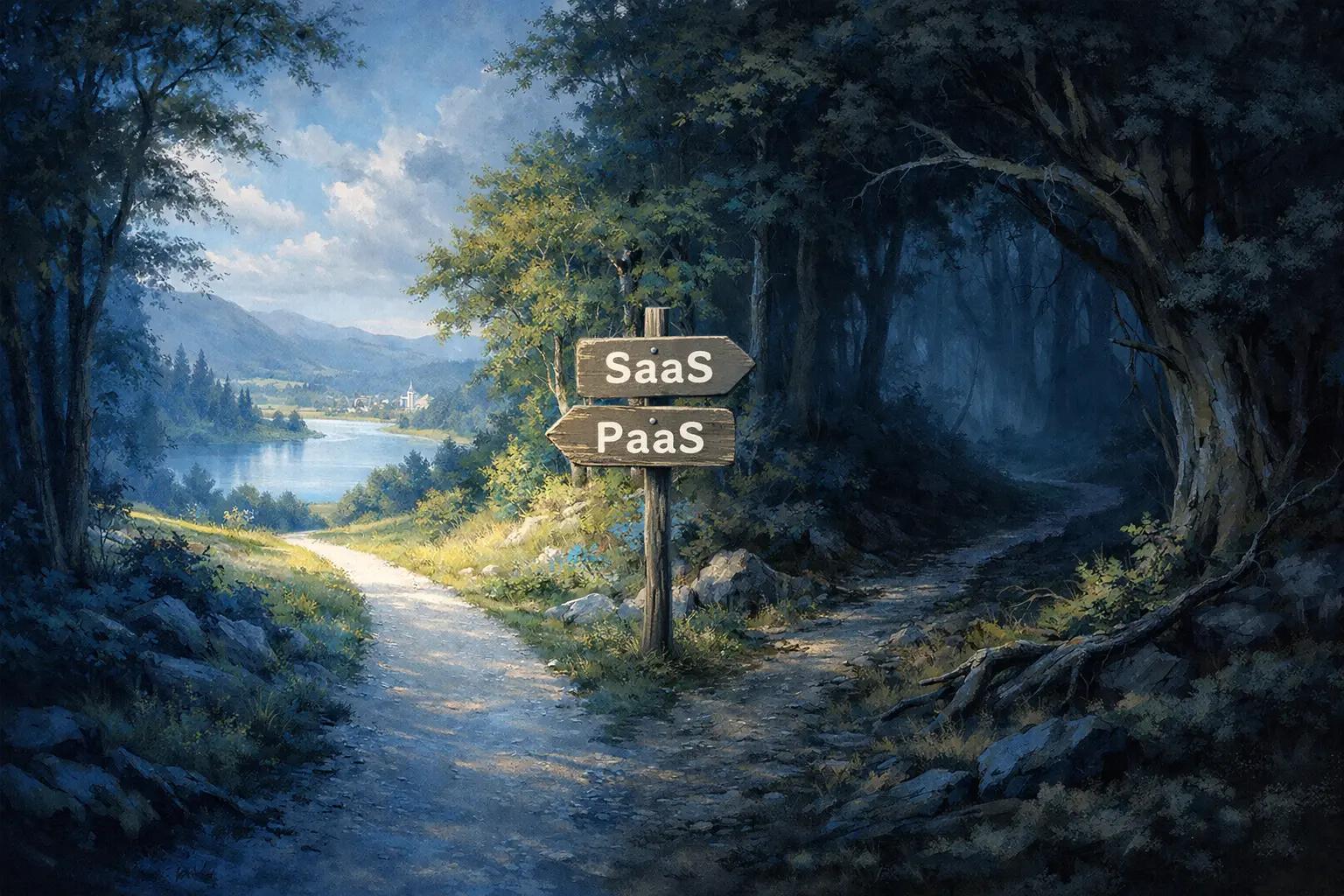
Optimizely’s SaaS CMS has been available for some time now, positioned as a managed headless alternative to the mature PaaS product. The vision is sound: content delivery through Optimizely Graph, Visual Builder for drag-and-drop editing, and reduced operational overhead. On paper, it should be the future of Optimizely’s content story.
In practice, the SaaS CMS has been curiously quiet. The migration path from PaaS to SaaS is not straightforward. Optimizely’s own developer documentation acknowledges that moving from CMS 12 to SaaS won’t migrate .NET code or customizations, making it “more of a re-implementation exercise.” Community members have even built third-party migration tools to fill gaps in environment comparison and schema management because the official tooling doesn’t exist yet.
The product is shipping features. The 2026 SaaS release notes show external content integrations, URL structure improvements, and steady incremental progress. But none of it has captured the market’s attention the way a flagship CMS launch should.
CMS 13: The PaaS Gets the Investment
Here’s where it gets interesting. While the SaaS product drifted in relative obscurity, Optimizely poured significant engineering into CMS 13 for the PaaS side, releasing it as generally available on March 31, 2026. This is the first major PaaS version in four years, upgrading to .NET 10, making Optimizely Graph mandatory, introducing Visual Builder as the default editing experience, and adding Opal Chat integration directly into the CMS.
One community blogger called it “the most marketing-significant Optimizely release in years.” Partner chatter has been notably higher for CMS 13 than for anything the SaaS product has delivered. Which raises an uncomfortable question: if the PaaS product is getting the energy, what exactly is the SaaS CMS strategy?
Optimizely insists both will coexist. Their official position is that PaaS and SaaS are “essentially the same product with different options.” All new development now focuses exclusively on CMS 13, with CMS 12 receiving only bug fixes and security patches. But the two-track messaging creates confusion for customers trying to make a five-year platform bet.
Did They Watch Sitecore Walk Off a Cliff?
There’s a theory worth considering. Sitecore’s transition from XP to XM Cloud was painful and very public. The early days of XM Cloud were marked by a bare-bones headless CMS carrying an enterprise price tag, riddled with bugs, limited support, no HIPAA or SOC 2 compliance, a revolving door of CEOs and leadership, and a partner ecosystem that openly questioned the strategy. For a stretch in 2023 and 2024, it was genuinely unclear whether XM Cloud would survive its own launch.
Optimizely had a front-row seat to all of it. Many of the same partners and customers work across both ecosystems. It’s reasonable to think Optimizely looked at Sitecore’s early SaaS stumbles and pumped the brakes on their own SaaS push. Why rush into the same kind of forced migration that nearly cost Sitecore its enterprise credibility?
The difference is what happened next. Sitecore doubled down. They put the full weight of leadership behind XM Cloud, invested aggressively in the platform, unified their product suite, and by November 2025 unveiled SitecoreAI, a complete reimagining that rolled out to every XM Cloud customer with no upgrade required. In 2026, SitecoreAI is arguably the flagship DXP in the market, with simplified pricing, an integrated Agentic Studio, and the kind of cohesive product narrative that enterprise buyers actually respond to.
Sitecore walked off the cliff, looked down, and built wings on the way down. Optimizely watched, decided not to jump, and now finds itself standing on the same ledge wondering if the moment has passed.
The Identity Question
The deeper issue isn’t really about SaaS versus PaaS deployment models. It’s about what Optimizely wants to be when it grows up.
The company’s roots are in experimentation. That’s still where much of its genuine competitive advantage lives. Its A/B testing and optimization capabilities remain among the best in the industry. The acquisition of Episerver brought in a mature .NET CMS with strong commerce integration. And now Opal represents a legitimate bet on AI-driven marketing workflows.
But trying to be an experimentation company, a CMS company, a commerce platform, and an AI orchestration layer simultaneously requires a coherent narrative that ties it all together. Right now, the narrative is fragmented. At Opticon, the story was about agents. On the product roadmap, the story is about CMS 13. On the SaaS side, the story is still developing. And for enterprise buyers evaluating a seven-figure platform decision, uncertainty is the one thing they will not tolerate.
What Needs to Happen
Optimizely has strong technology. CMS 13 is a legitimate release. Opal has real potential. The experimentation suite remains best-in-class. But the company needs to decide whether the CMS is a flagship or a footnote, and then act accordingly.
That means putting the CMS front and center at the next Opticon, not as a sidebar to the AI story. It means clarifying the SaaS CMS roadmap with the same conviction that Sitecore showed when it committed to XM Cloud. And it means giving enterprise buyers a clear, confident answer when they ask the most basic question in the DXP market: “Should I build my future on this platform?”
Right now, too many people are leaving Optimizely events without a good answer. And other platforms are noticing.
The DXP Scorecard evaluates Optimizely across both its PaaS and SaaS products independently, with scores that reflect the current state of each platform’s strengths and gaps.